
Beyond Community GardensSustainable Community RecoursesM.A.P.
A Food Forest Project
What is going away (and why)?
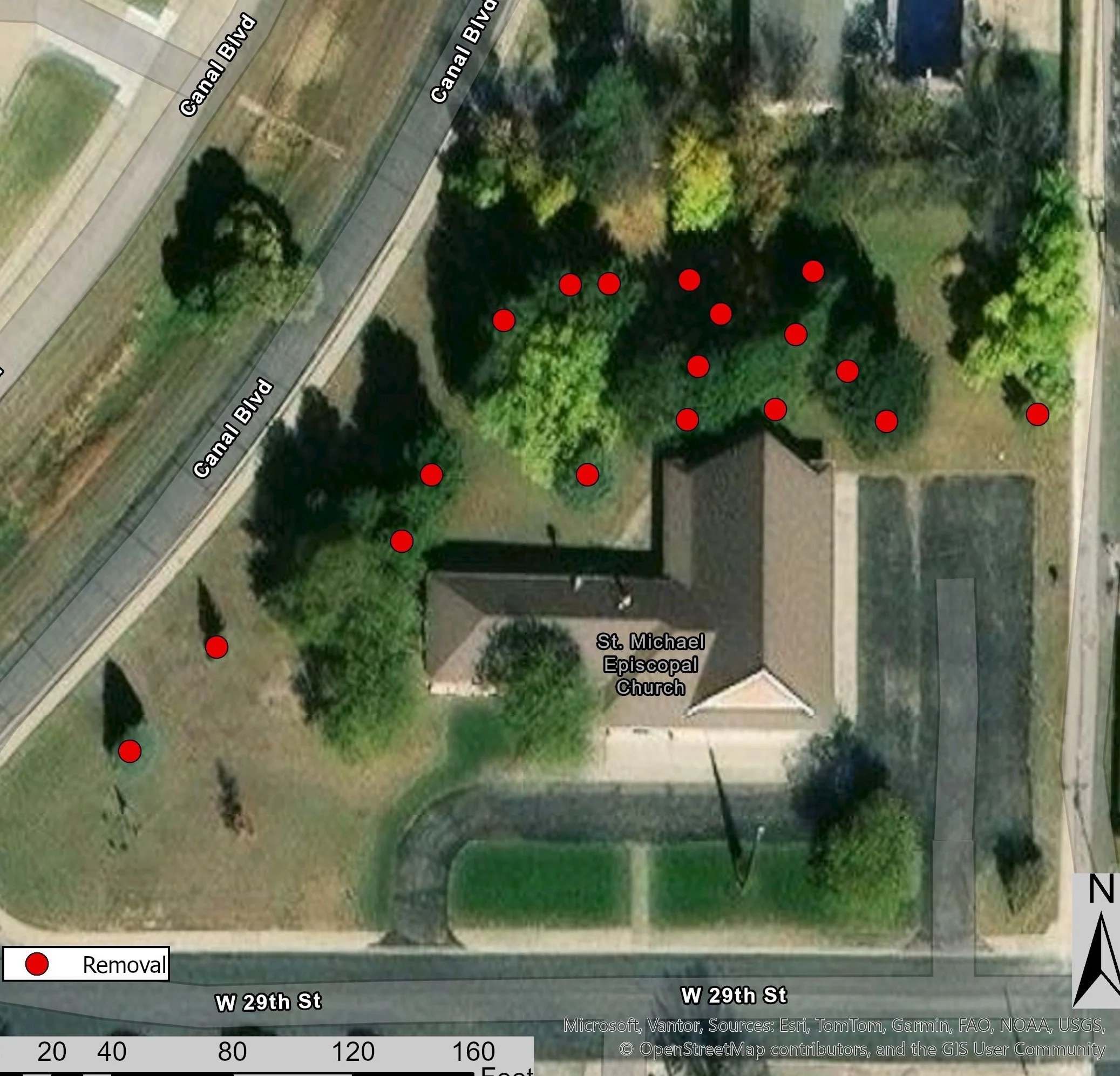
18 trees on the property are being cut down.
All of the trees being taken out are evergreens
All of the trees will be used in the upcoming project.
A large portion of the lumber will be logged into 4-8 foot sections that we will use for everything from Hügelkultur to log benches that will be dedicated to the memory of Arthur C. Joy who planted these trees all the way back in the 1970s when the church was originally built.
What isn’t logged will be mulched for use in 2 primary places
We will be sending a large portion of the mulch to the Kansas Black Farmers Association. We have been working with them on a few of their projects, and they will be assisting us with this as well, so we will be sharing lots of recourses.
The rest of the mulch will be used by M.A.P. for this food forest, as well as other garden and farming projects we are working on in the community.
What is coming next,
And why are we bringing it?
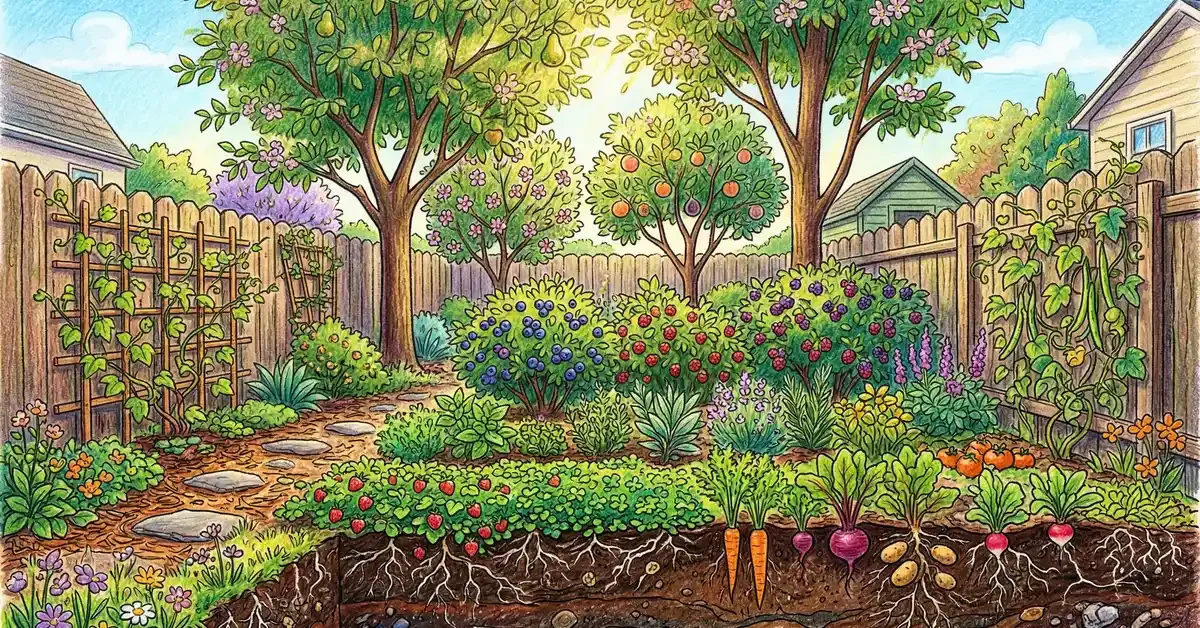
Canopy
.
Understory
·
Shrub
·
Herbaceous
·
Ground Cover
·
Vine
·
Root
·
Canopy . Understory · Shrub · Herbaceous · Ground Cover · Vine · Root ·
The Food Forest
If you have any questions or comments about this project, or if you would like to donate time, resources or money to this project, please reach out to Rev. Benjamin Houchen at stmikes2900@gmail.com, or text him at 785-259-2851
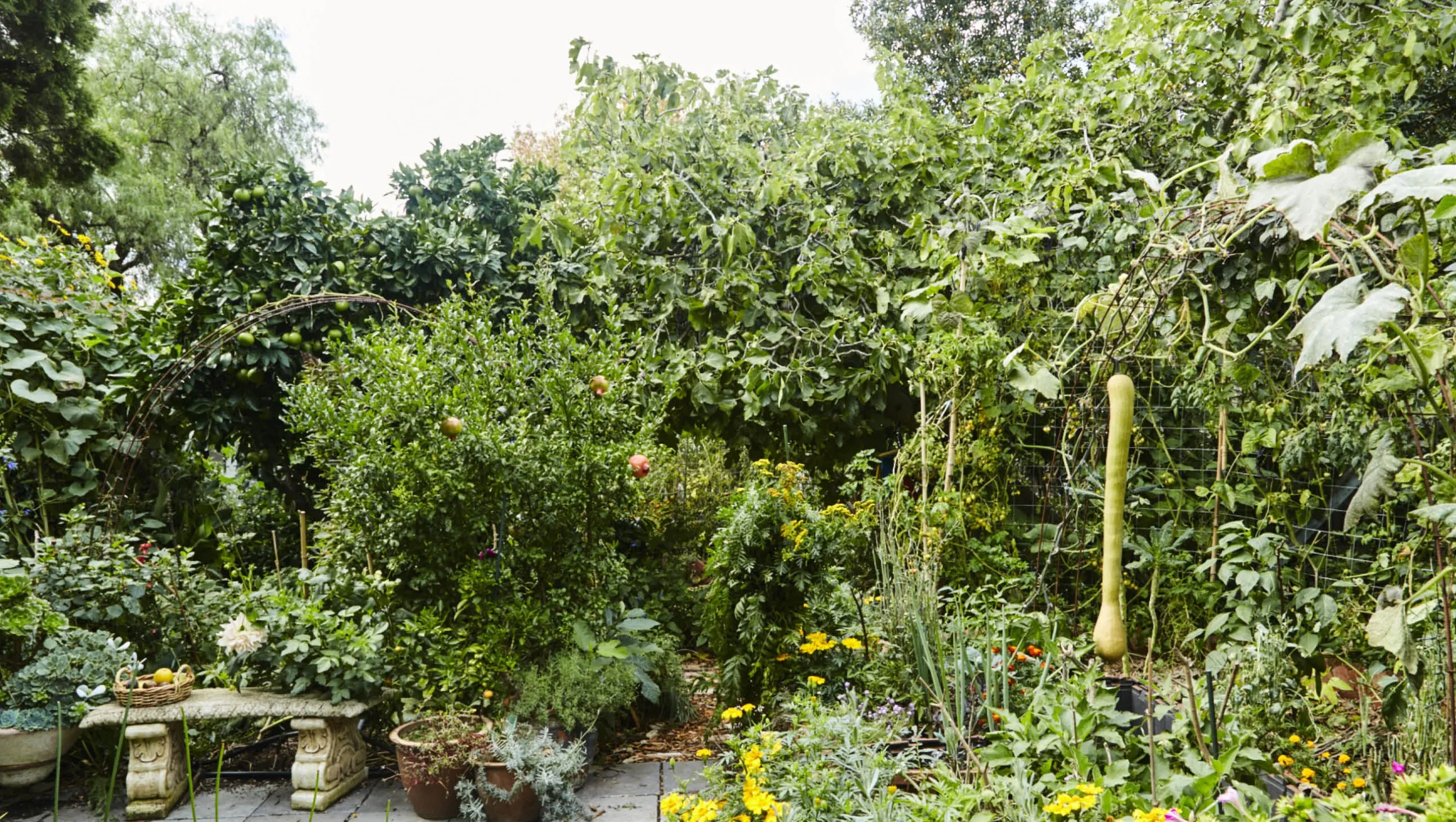
The Food Forest at St. Michael’s will be a self-sustaining, low-maintenance, water efficient, and highly bio-diverse garden. it will be specifically designed to replicate a natural Kansas biome by growing varied layers of edible and otherwise useful plants together in one symbiotic ecosystem.
As Peter Vogel, the founder of GrowPerma writes:
You want a garden that will “produce food year after year without starting from scratch every spring. That's exactly what a food forest does. Instead of planting in rows like a traditional garden, a food forest stacks edible plants vertically in seven distinct layers, mimicking the way a natural woodland grows. The result? More food from less space, less work once established, and a garden that actually gets better with time.”
That is our goal. To create a community garden that is not reliant on massive amounts of, replanting, and tending to produce great food for years, for generations to come.
Cutting down the trees may seem awful to some. But what we will use those trees, and this space for will be great benefit to our neighborhood and our community.